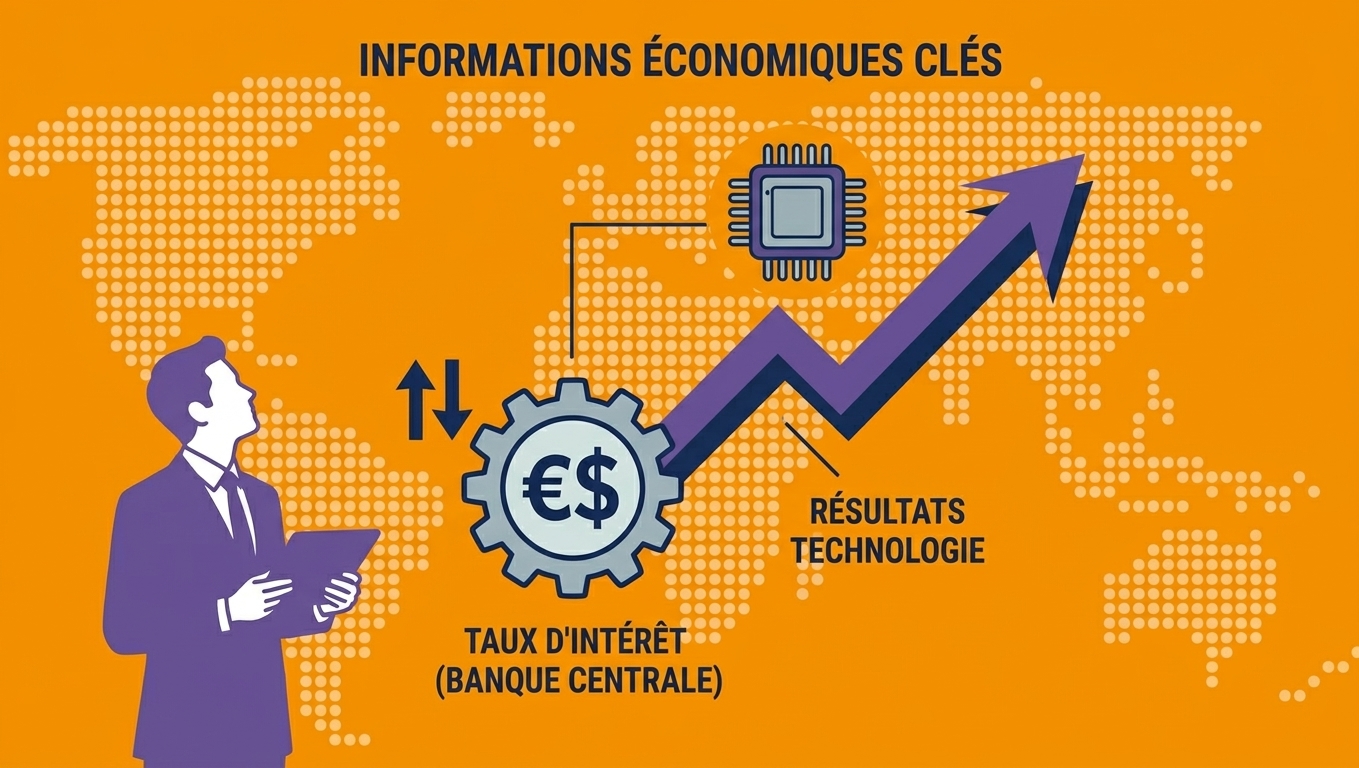
In a global economic environment shaped by volatility, monetary policy shifts, and the acceleration of disruptive technologies, every quarter brings its share of decisive milestones. For the informed retail investor, following the news isn’t about overreacting to short-term market noise, but rather extracting subtle signals and major catalysts that could reshape portfolio strategy over the short and long term.
Whether you manage a brokerage account, tax-advantaged savings accounts, or unit-linked life insurance contracts, here is the breakdown of the key information to keep on your radar over the coming days.
1. Microeconomics: The Kick-Off of Earnings Season
This is the primary event that reshuffles the deck in the very short term. The third-quarter financial earnings season is officially underway, offering a crucial reality check on the actual health of listed companies.
-
What to watch: All eyes are on mega-cap tech stocks and major global indices (notably the S&P 500 and Nasdaq). Beyond earnings per share (EPS), analysts will be paying extra attention to the forward-looking corporate guidance provided by executives for the end of the year and the next fiscal period.
-
The focal point: The profitability of Capital Expenditure (CAPEX) related to Artificial Intelligence. With hundreds of billions of dollars poured into infrastructure and data centers, the market now demands concrete evidence of top-line revenue growth and return on investment.
-
Impact on your portfolio: Expect heightened intraday volatility. If a tech giant disappoints on its forecasts, the sell-off can drag down the entire sector. For advanced individual investors, these knee-jerk reactions to the downside often create tactical entry points for companies with solid fundamentals.
2. Macroeconomics: Bond Yields and Central Bank Decisions
The fixed-income market is experiencing renewed tension and interest. While the initial phase of rate cuts by the Federal Reserve (Fed) and the European Central Bank (ECB) has been priced in, the future trajectory of benchmark interest rates remains a subject of intense debate.
-
What to watch: Upcoming Consumer Price Index (CPI) releases and labor market data. Any signs of persistent inflation—fueled by volatility in energy prices and raw materials—could prompt central bankers to slow the pace of monetary easing.
-
Bond market reaction: Government bond yields are edging up again, attracting capital seeking safety, yield, and visibility.
-
Impact on your portfolio: If you hold money market funds or cash equivalents, keep in mind that their yields will continue to soften over the medium term. Reallocating part of your cash reserves into fixed-maturity bond funds or high-quality corporate bonds (Investment Grade) remains a timely strategy before yields drop permanently.
3. Materials & Energy: Geopolitical Tensions and Commodity Dynamics
The commodities market remains a major catalyst for both risk and opportunity. Between the risk of shipping bottlenecks on strategic maritime routes and production adjustments, the energy sector demands constant vigilance.
┌────────────────────────────────────────────────────────────────────────┐
│                         KEY POINTS TO WATCH                            │
├──────────────────────────────┬─────────────────────────────────────────┤
│ Short-Term Event             │ Potential Impact on Investments         │
├──────────────────────────────┼─────────────────────────────────────────┤
│ Q3 Earnings (Technology)     │ Index volatility (S&P 500 / CAC 40)     │
│ Inflation Releases (CPI)     │ Rate adjustments & bond funds           │
│ Oil/Gas Price Fluctuations   │ Pressure on consumer & luxury stocks    │
└──────────────────────────────┴─────────────────────────────────────────┤
-
What to watch: Weekly reports on crude oil inventories and announcements from oil-producing nations (OPEC+).
-
Impact on your portfolio: A sudden spike in oil prices acts as a “tax” on household consumption and directly squeezes margins for industrial and transportation companies. Conversely, a tactical overweight in energy stocks or clean energy transition assets can help stabilize a growth-tilted portfolio.
4. Wealth Strategy: What Stance Should You Adopt?
Faced with such a dense stream of information in the coming days, the most common trap for retail investors is over-trading. Yet, it is precisely during these moments of market uncertainty and heavy news flow that strategy must prevail over emotion.
Smooth Your Entry Points (DCA)
If earnings season brings market pullbacks, do not attempt to time the market or guess the exact bottom. The Dollar Cost Averaging (DCA) method—investing a fixed amount at regular intervals—proves its effectiveness during phases of market hesitation.
Review Your Sector Allocation
Equity market performance continues to show strong divergence. While AI and tech companies carry a disproportionate share of total market returns, defensive or undervalued sectors (such as healthcare or traditional software) offer attractive risk/reward profiles for long-term core holdings.
Maintain a Strategic Cash Reserve
A healthy wealth allocation should never be 100% invested in illiquid or high-risk assets. Keeping a cash cushion available gives you the flexibility to seize specific market opportunities without having to panic-sell existing positions at unfavorable prices.
Summary
The coming days will be rich in insights for the year ahead. Between corporate earnings from market leaders, interest rate adjustments, and commodity market swings, the current backdrop calls for sharp yet disciplined attention. Focus on structural trends rather than getting distracted by immediate volatility—that is the true mark of long-term investing over short-term speculation.